Managing Complex Organizational Data: SQL Schemas and Entity Framework in GRC
Designing databases for Governance, Risk, and Compliance (GRC) tools requires strict attention to complex organizational hierarchies. This article dives into structuring scalable SQL schemas and optimizing Entity Framework queries for multi-tiered enterprise platforms.
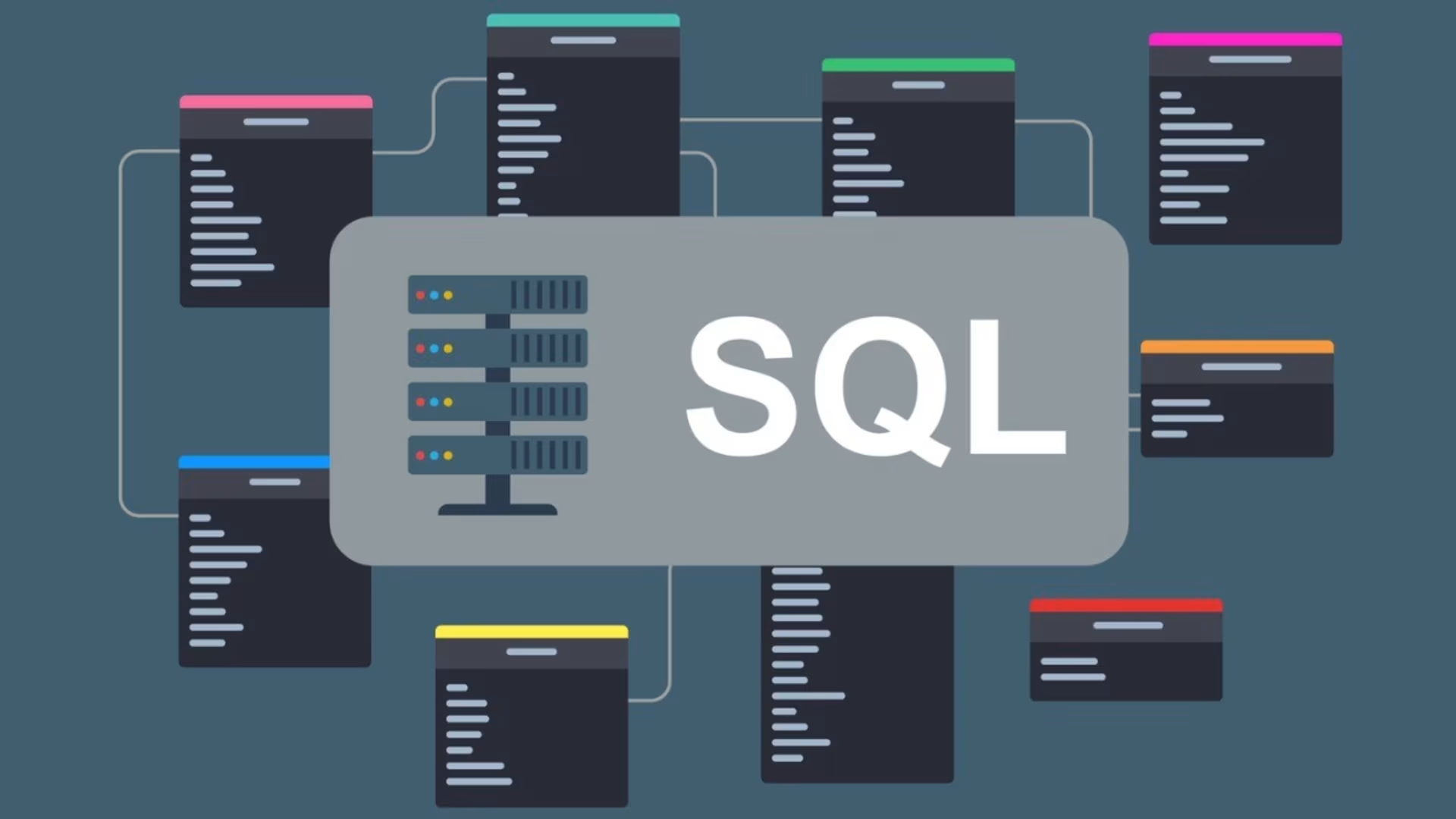
At the heart of any robust Governance, Risk, and Compliance (GRC) platform is a complex, meticulously structured database. When dealing with enterprise clients, a flat data structure is rarely sufficient. Developers are tasked with mapping out multi-layered organizational tiers—from parent companies down to individual departments and users—while ensuring that data silos remain secure and strictly separated.
Achieving this requires a thoughtful approach to SQL schema design. By clearly defining relationships, foreign keys, and access controls at the database level, teams can prevent data bleed and ensure that users only see the compliance metrics, risk assessments, and policies relevant to their specific clearance level.
To bridge the gap between these intricate SQL databases and the application's frontend, Entity Framework (EF) serves as an invaluable tool within the .NET ecosystem. When properly optimized, EF allows developers to write clean, maintainable C# code while seamlessly handling the heavy lifting of complex joins and nested queries required by GRC organizational models.
However, relying on Entity Framework for multi-tiered systems requires careful attention to performance. Developers must proactively manage tracking behavior, utilize eager or explicit loading where appropriate, and ensure that queries are structured to prevent performance bottlenecks as the platform's data grows. Ultimately, a well-architected backend is what empowers a GRC application to handle enterprise-level demands smoothly and securely.
← Back to Articles
Comments (0)
Be the first to comment.
Leave a comment